How to Cost a Menu in South Africa, and Where It Goes Wrong

Sitting down with your food costing sheets without getting a headache is a feat worth applauding. Food inflation is a beast on its own, and managing a menu for an independent restaurant in South Africa comes with its own unique set of chaotic operational challenges. Between keeping the lights on and navigating volatile supplier pricing, nailing your final plate price is a balancing act that many venues get wrong without even realising it.
When profit margins shrink, it is easy to assume you just need to work harder or pack the house out on the weekend. But if your fundamental menu costing is flawed, being busier just means you are losing money faster.
This guide breaks down traditional costing models, outlines the distinct realities of the South African market, and looks at how to protect your bottom line without alienating your guests.
Short on time? If you are currently standing in the kitchen prepping for the next rush, you can skip straight to our Bite-Sized Costing Summary Here.
1. The Traditional Costing Formula: How to Not Get Caught Out
Most culinary schools and business textbooks teach a standard, clean mathematical formula to determine final product prices on a menu. It looks like this:
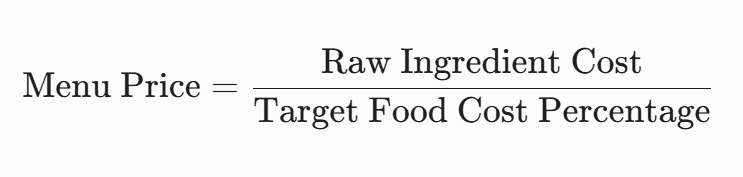
For example, if the raw ingredients for your signature gourmet burger cost you R35 to put together, and your target food cost percentage is 30% (or 0.30), the calculation is straightforward:
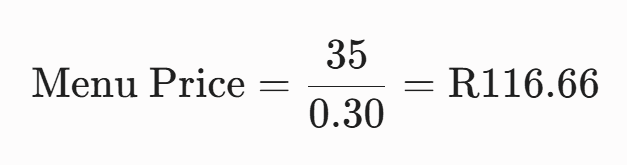
You round that up to R119 or R125, and you think you are completely safe.
How Restaurant Owners Get Caught Out
The trap with this formula is that it treats your raw ingredient cost as a fixed, permanent number. It assumes your R35 burger cost stays at R35 forever.
In reality, if a crate of tomatoes spikes by 40% over a weekend, or your cheese supplier adds a sudden fuel levy, that R35 cost quietly climbs to R43. Suddenly, your actual food cost percentage jumps from 30% to nearly 37%. Because your printed menu still says R119, your profit margin is actively eroding on every single order before you have even paid your staff or rent.
Relying blindly on a static formula without tracking micro-changes in your kitchen is the fastest way independent venues lose money.
2. The South African Reality: Utilities, Fuel, and Sticky Pricing
While international operators worry primarily about wholesale ingredient shifts, South African restaurateurs face a much more volatile ecosystem.
Rising Utility Costs and Hidden Overheads
Operating expenses in South Africa involve massive variables. While the need for backup power infrastructure may not be the highest priority these days, escalating electricity and water prices have stepped in as the new silent profit killers. These are operational expenses that must be factored into your baseline business costs, or they will swallow your food margins whole.
The Geopolitical Fuel Tax
Recent global tensions in the Middle East have caused massive volatility in local fuel prices. When fuel prices climb, the entire supply chain starts including surcharges to their costs, resulting in instant pressure on your bottom line.
The biggest irritation for local owners is the reality of sticky pricing. When fuel prices subsequently decrease, suppliers are rarely as quick to follow with lowering their wholesale prices. They maintain their inflated rates, leaving you to absorb the difference.
3. Taking a Holistic Approach to Pricing: Protecting Your Favourites
When your input costs rise, you have two traditional options: hike your prices across the board, or go the shrinkflation route and cut your portion sizes.
Both options carry massive risks. If regular customers sit down and notice that their favourite steak has shrunk from 300g to 250g, or that the price has suddenly jumped by R30, the illusion is broken. They feel cheated, they stop returning, and they might even slate your venue on a local foodie Facebook group.
Spreading the Pain
Instead of triggering an uproar by changing your crowd-pleasing signature dishes too drastically, another option is to take a holistic approach to your overall menu pricing. Think of this like the classic captive margin model (similar to the printer and ink pricing model), where a business keeps its most popular attraction product highly affordable and accessible to maintain customer loyalty.
Identify your specific customer favourites, meaning the iconic dishes that define your brand and bring feet through the door. Protect the pricing and portion sizes of these specific items fiercely.
To make up for the lost margin, spread the financial pain across products where customers have far less price sensitivity. Patrons will notice a major price hike on a signature burger, but they rarely blink if you add a few Rands to the price of craft beers, soft drinks, milkshakes, side dishes, or speciality desserts. By over-recovering your margin on these high-margin items, you can keep your main attractions priced attractively.
4. The Hidden Vampires of Profit: Printed Menus
When input costs shift, a restaurant owner might know exactly what needs to be updated, but the physical reality of a traditional printed menu stands directly in the way.
Printed menus carry massive hidden liabilities that eat up your administrative hours, design budget, and focus:
The Cost of Friction: If a supplier hikes your steak costs, it might cost you R2,000 in design fees and printing costs just to update that single price across your tables. Because reprinting is so expensive and comes with long lead times, many owners choose to delay the change, which means intentionally running the business on a collapsed margin for weeks on end.
Wear and Tear: Menus get damaged, wet, and dirty. Constantly replacing, cleaning, and sanitising grubby pages is an endless operational headache.
The Typo Nightmare: There is nothing more frustrating than opening a fresh box of prints only to discover a formatting error, an incorrect price, or a glaring typo.
Wasted Flexibility: If you want to test a temporary dish, run a weekend special to attract feet, or host an event, you may resort to printing loose paper inserts that look untidy. If these new offers stay hidden away on a social media post, curious browsers finding you on Google Maps may never know they exist.
5. Bridging the Gap with Flexible Technology
To combat these challenges and achieve true margin flexibility, independent restaurants are changing how they present their offerings. This does not mean you have to completely eliminate paper if your guests love it, because your target customer base should always remain your number one priority.
Instead, look at technology as a tool that scales to match your specific style of hospitality. Smart visual platforms like YumEase offer a realistic hybrid route to operational freedom.
Option A: Complete Online Consistency
At the very minimum, you can use a platform like YumEase to manage your online storefront. It ensures that whenever a potential customer looks at your menu via Google Maps, your website, or your social media bios, they see an identical, perfectly formatted, and completely up-to-date visual menu. If you want to test a dish idea or announce a weekend event, it can be added instantly, giving potential guests a clear reason to visit.
Option B: Full Margin Control at the Table
For venues looking for total protection against margin creep, migrating entirely to a digital tableside menu platform is a game-changer. When your menu lives digitally via a quick QR scan, you gain absolute pricing flexibility. If the price of avocados or fresh fish skyrockets on a Tuesday morning, you can adjust the price by R5 to preserve your margin, and save it instantly without designers, print lead times, or wasted paper.
The Bottom Line on Menu Costing
Nailing your food cost is not just about the day you open your restaurant; it is an ongoing weekly discipline. By combining a holistic pricing model that protects your crowd-pleasing dishes with modern, flexible tools like YumEase, you remove the friction of running an independent kitchen in South Africa. You gain the freedom to react to the market in real-time, protect your hard-earned margins, and focus entirely on providing a memorable experience to your guests.
Want the quick reference guide for your office wall?
We have condensed this entire operational costing guide into a practical, step-by-step checklist for busy owners and kitchen managers. Get the key takeaways and immediate margin-protection steps here.