QR Code Menu for Restaurants in South Africa: How to Do It Right (Without Frustrating Your Guests)
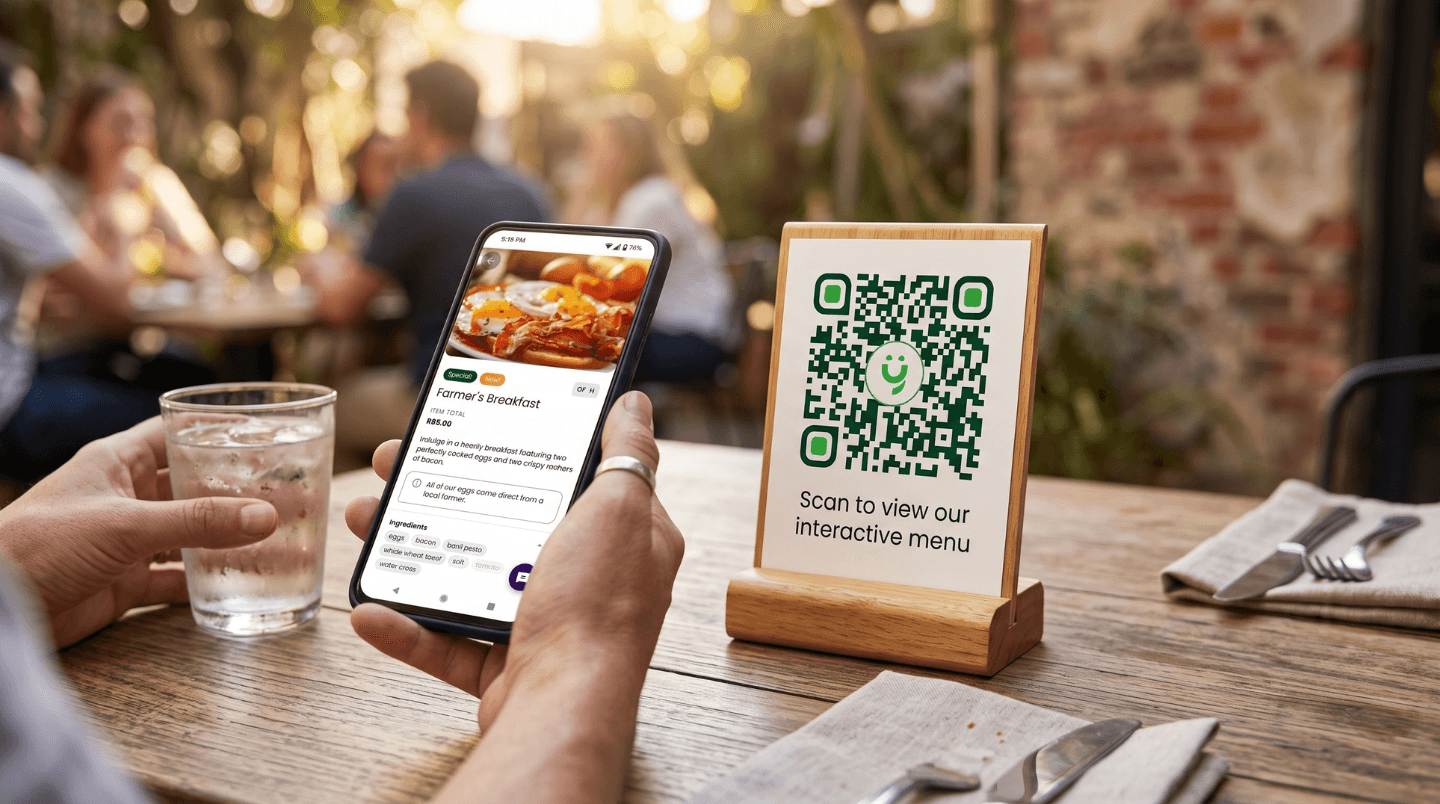
Implementing technology in a restaurant can sometimes feel like a double-edged sword. On one hand, you want to make things faster, cheaper, and more modern. On the other hand, the last thing you want is to alienate your loyal diners who just want to sit down and enjoy a meal without a technology lesson.
QR codes have become part of daily life in South Africa, from paying a bill to checking in at a secure estate. When it comes to dining, however, many independent restaurants are still getting them wrong.
This guide looks at how to use a QR code menu for restaurants in South Africa to create real customer convenience, avoid common digital traps, and keep your tech-savvy and traditional guests equally happy.
Short on time? If you are busy managing a floor right now, you can skip straight to our Bite-Sized QR Code Checklist Here.
1. What is a QR Code, and How Does It Actually Help My Restaurant?
In simple terms, a Quick Response (QR) code is a pixelated barcode that any smartphone camera can read. When a customer points their phone at it, the code instantly redirects them to a digital destination, such as a website, a document, or a menu.
Used correctly, QR codes are incredibly convenient for both you and your patrons. Here are some of the most common and practical ways to use them in your business:
On Your Front Window: Allows pedestrians or curious passers-by to scan and browse your menu at any time.
On Promotional Flyers: When doing post box drops or putting flyers under car windscreens in your local neighbourhood, a QR code lets locals view your offerings instantly.
At the Table: Placed on table talkers or directly on your physical menus to show off rich, vibrant food photos and daily specials.
For Guest Wi-Fi: Allowing customers to scan a code to connect to your network without typing in a complicated password.
Post-Dining Feedback: A quick scan on the bill folder to take the customer directly to your Google Business Profile to leave a review.
2. The Destination Dilemma: The QR Code is Only the Vehicle
Many restaurant owners make the mistake of thinking that putting a QR code on a table is the ultimate goal. It is not. The QR code is simply the vehicle, but the destination is what actually matters to your guest.
Think of it this way: it is like welcoming a guest with a brilliant, warm greeting at your front door, walking them to an impeccably set table, and then handing them a sticky, stained paper menu with torn pages. The initial introduction was seamless, but the actual point of interaction feels completely neglected.
If your QR code takes a customer to a clunky, broken, or outdated link, the convenience is completely ruined. In fact, a bad digital destination is far more frustrating to a customer than having no technology at all.
3. The Mobile Data and PDF Trap
The most common way South African restaurants use QR codes is to link them to a static PDF of their printed menu. While this is cheap and easy to set up, it neglects the customer experience for several reasons:
The Mobile Data Drain: High-quality PDF menus can be massive files. In South Africa, where mobile data costs are a constant consideration, forcing a guest to use up their data just to see what starters are available is not a great start to their experience.
The Pinch-and-Zoom Pain: Traditional menus are designed for large sheets of paper, not vertical smartphone screens. Forcing older or visually impaired guests to pinch and zoom across a tiny PDF screen to read your prices is incredibly frustrating.
Out-of-Date Information: PDF menus are static. If you are hosting an event aimed at attracting guests on a Tuesday night, or if you want to run a temporary weekend special, you cannot easily change the PDF. This means your digital menu is rarely fully accurate, which leads to missed opportunities to attract new customers or encourage future reservations.
Before rolling out QR codes, you must assess your customer base. If your regulars are older, you should never force them to use a digital menu. Instead, use QR codes as an optional upgrade to enhance their experience, whilst keeping printed menus available for those who prefer them.
Feature | Static PDF Menu Scan (The Old Way) | Dynamic Smart Menu (The YumEase Way) |
Mobile Data Impact | Potentially heavy files that eat up precious customer mobile data. | Lightweight, fast-loading visual and interactive interface. |
Reading Experience | Forces guests to pinch, scroll, and zoom across a tiny phone screen. | Fits perfectly and scales beautifully on any mobile device. |
Price & Dish Accuracy | Static and rarely up to date, often missing specials or seasonal price changes. | Updates instantly in real-time to prevent guest disappointment and protect your margins. |
Menu Imagery | Generally plain text, seldomly including any food images. | Include rich, vibrant food photography that triggers the brain’s hunger response. |
4. The Pitfalls of Basic QR Code Hosts: Avoid the Hostage Situation
When looking for a QR code menu for restaurants in South Africa, you will find many basic online providers who offer to host your menu. You must be highly cautious here, as many of these services function like a hostage situation:
The Monthly Fee Trap: Many third-party providers will host your static menu document on their servers for a recurring monthly fee. The second you stop paying their subscription, the link breaks, and your QR code stops working completely.
The Printed Collateral Disaster: With basic providers, if you need to update your menu or change a price, the URL link often changes too. This means your old QR code becomes obsolete. If you have already printed that QR code on promotional flyers, window decals, or heavy wooden table talkers, all of that expensive marketing material has to be thrown away and reproduced.
5. How YumEase Solves the QR Code Dilemma
To make QR codes work for your business, your digital menu needs to be fast, interactive, data-friendly, and always up to date. This is where a dedicated platform like YumEase changes the game for independent South African restaurants.
Instead of a heavy, frustrating PDF, YumEase provides a lightweight, highly interactive digital storefront that displays your story, your pricing, and beautiful images of your food in a format that fits perfectly on any phone screen.
[Branded YumEase QR Code] ➔ [Dynamic Storefront] ➔ [Happy, Tech-Savvy and Traditional Guests]
One Code, Infinite Updates
When you partner with YumEase, you receive a custom, branded QR code that belongs to your venue. This code never changes. Whether you change your prices, add seasonal dishes, or run a sudden weekend event, your menu can be updated instantly in the backend. The QR code printed on your tables, windows, and flyers remains exactly the same, saving you thousands of Rands in reprinting costs.
Consistency Across the Web
Because YumEase serves as your central digital menu hub, any change you make is instantly updated everywhere. This means your visual menu is identical on Google Maps, Facebook, Instagram, and your physical tables, giving your business maximum marketing power and operational consistency.
Taking the Next Step in Your Business Journey
QR codes are a fantastic tool for driving customer convenience and neighbourhood discovery, but they are just one part of your business strategy. If you are looking to take total control of your kitchen margins and want to learn how to retire printed menus altogether to fight inflation, you can read our companion operational guide: [How to Cost a Menu in South Africa, and Where It Goes Wrong].
Ready to simplify your tableside experience?
We have put together a quick-reference guide on how to roll out QR codes in your restaurant without causing a single headache on the floor. Get your quick takeaways and action steps here.